Coming off consecutive two games to one series wins on the road against the playoff contending Mariners and Dodgers, and sporting a 7 game lead over their division rivals from Atlanta, talk in Washington had turned from winning the division to the possibility of winning the
World Series.
And for nearly seven inning last night, the Nats indeed were looking like world-beaters. Behind the solid starting pitching of Stephen Strasburg and some timely hitting, they held what appeared to be a comfortable 7-2 lead and were threatening for more with one out, runners on second and third, and Bryce Harper at the plate.
And even when Jason Werth was thrown out at the home by a perfect throw from leftfielder Dominic Brown after catching Harper's flyball, and Werth's less than perfect slide, missing the plate with his foot and being tagged out in the split second it took for his leg to smother the plate, the game looked very much under control.
But then, for the next hour or so, some amateur level baseball in conjunction with some bad luck turned things around completely resulting in a 9-8 Phillies win in 11 innings.
Only time will tell whether this was just one unfortunate blown game, or the Nationals weaknesses rushing to the surface all at once exposing a team that just isn't ready for the gritty baseball needed to succeed in a pennant race and post-season play.
In the top of the eight, the Phillies would register two runs after two men were out. With runners on first and second, Chase Utley smacked a sinking line drive into left-center field. Center fielder Dennard Span had a long run but with the ball hit to his gloved side had a clear opportunity to make a sliding catch to end the inning. Certainly a tough chance, but one you see made nearly night in some ballpark across America via SportsCenter.
Though Span got to the ball in time, he ended up whiffing on the catch with the ball actually going over his glove rather than under it for waht was properly ruled a double. Grady Sizemore, who had reached base earlier on an Anthony Rendon error, scored easily on the play. Then Ryan Howard followed with a perfect, though unintentional, swinging bunt rolling the ball perfectly in the Bermuda Triangle between the pitchers mound and first and second bases.
But after Marlon Byrd's deep fly to right settle in Werth's glove, the Nationals still held a 7-4 lead.
Besides some shaky fielding, and seemingly no killer instinct, the biggest position weakness for the Nationals is in the closer role, so Nats fans could take little comfort when Raphael Soriano, (the human heartache) with his ERA of over 6.00 since the All-Star break, took the bump for the top of the ninth along with his 6.00+ ERA since the All-Star break.
By the time Soraino was pulled by manager Matt Williams with two outs in the ninth, he had given up a two-run homer to Carlos Ruiz, and a two out, two strike home run to Ben Revere, only Revere's second round tripper in nearly 500 at bats this season.
Then to complete the meltdown, the Phillies were gifted two more runs in the 11 inning, set up by Harper running into Span on very catchable fly to leftcenter field and compounded by yet another error, this time on a throw to the plate by first basemen Ryan Moore.
So instead of leaving Nationals Park Friday evening up one more game in their division, Washington was left to ponder not only the loss of this one game, but their fundamental fielding flaws, while searching for a closer who will allow them to be competitive come October.
Saturday, September 6, 2014

Monday, August 25, 2014
Jay Gruden's No Good Very Very Very Bad Day
You can feel it coming. The painful, and possibly defining moment, of Jay Gruden's tenure as the head coach of the Washington Redskins. Though Gruden hasn't even coached his first regular season game for the Redskins, the clock is already ticking toward a major crisis. And how he handles it, could determine whether there is a Gruden era in Washington.
After seeing his 1st team inept offense performance against the Baltimore Ravens Saturday evening, it doesn't seem like much of a stretch to imagine that around 4:00 P.M. on September 14th, Gruden and his team being escorted from FedEx Field by what's left of an angry and frustrated home crowd after losing a sloppy game to the less than stout team from Jacksonville. And if this follows an opening weekend loss in Houston, Gruden will then face a stream of media questions as a winless head coach with a major quarterback controversy on his hands.
Against the Ravens, Washington's face-of-the-franchise quarterback was awful, overseeing an offense that produce almost as many turnovers (2) as it did points (3) in a little more than a half of play. And this doesn't count RGIII's flub of simple and accurate shotgun snap that robbed his team of the chance to keep a promising drive going.
For the evening, Griffin's quarterback rating of 27.1 was a good indication of how badly he and his offense mates played. At least on this night, he and his mates looked like a team that will struggle to win a game, any game, let alone deserve to be in the playoff conversation.
Last year, Griffin was obviously struggling physically with his knee - never displaying with the speed and explosiveness that had marked his successful rookie campaign in 2012. So far this preseason, his speed seems to have returned, and he has thrown a few really crisp, accurate passes.
But he hasn't shown any ability to throw under pass-rush pressure, or to quickly diagnose defenses and respond with a quick release. And even when he has plenty of time in the pocket, it too often appears that he just doesn't see the field very well.
A prime example of this was the disaterous first play from scrimmage to open the second half against the Ravens. The offense line did a good job on this occasion, giving Griffin plenty of time to survey the field. And, even on TV, it was obvious that tight end Jordan Reed was running virtually uncovered up the left seem. Surely, with time, Griffen would spot him and make a fairly routine throw for a big gain.
Instead, after seemingly taking a glance in Reed's direction, Griffen held the ball for an extra count before dumping it off to Alfred Morris, who had swung out of the backfield while tracked by two Ravens. As the ball arrived, Morris was sandwiched, popping it up into the air for an easy interception.
The fact that Kirk Cousins entered the game on the next series looking sharp and decisive, making quick reads and mostly accurate throws will undoubtedly put extra stress on Gruden if Griffin and the offense doesn't perform considerably better once the regular season gets underway.
And by around 4:00 on September 14th, if the Redskins are 0-2, and the offense is largely to blame, Gruden will be holding perhaps the most uncomfortable, and the most important media session of his entire life.
Gruden was brought to Washington to win with Griffin, and it will be very interesting to see if circumstances and performance allow him to stick with that plan past the first two games of his head coaching career.
Sunday, August 10, 2014
Proving a Negative with Brady and Belichick
They say you can't prove a negative, but Washington's 23-7 preseason win over New England on Thursday night may be as close as you can come. With Tom Brady most certainly sitting out the entire game, and Coach Bill Belichick apparently sitting this one out as well as he stood mostly stone-faced on the sideline, the Redskins dominated the game from start to finish.
Without Brady's quick release and surgical precision from the pocket, and Belichick's innovative defensive schemes that so often limit the attack options of the opposition, a SuperBowl contender like the Patriots didn't evening look ordinary in this preseason affair -- they looked completely over-matched.
 Washington dominated the line of scrimmage on both sides of the ball, piling up nearly 200 yards rushing. Unlike what would unfold in a regular season match-up, the Patriots played the Redskins powerful rushing attach straight up, without any Belichick-inspired wrinkles or blitzes to disrupt their rhythm. The result was being the Redskins moved the ball steadily, accumulating 26 first downs to only 15 for the Patriots, while punting only once over the course of the game.
Instead of employing any strategic changes to bolster his team, Belichick seemed content to watch basic one-on-one match ups play out, even as his second and third units weren't showing much of an ability to win these "games within the game."
And while it is certainly true that several key starters on offense, including Brady sat out the entire game, the first quarter struggles of starting left tackle Nate Solder, demonstrated clearly how much difference Brady makes with his sharp decision-making and quick release.
On several running plays to Solder's side of the Patriot line, Solder and his mates were completely overwhelming by the aggressive charge of the Redskins linebackers. For the game, the Patriots were only able to manage a total of 63 rushing yards. Brady's ability to get out of doomed plays at the lien of scrimmage and audible to take advantage of an aggressive opponent was no where in sight.
But it was two first quarter pass plays that demonstrated how much Solder and the Patriots really rely on Brady's savvy. On the first play, outside linebacker Brian Orakpo faked an outside move, then ducked inside to pressure backup quarterback Ryan Mallett. Instead of sensing the rush and drifting to his left to create a better angle for Solder, as Brady has done hundreds of times throughout his 15 year career, Mallett, stood focused only on his receivers, leaving Solder with the option of hauling Orakpo down from behind, which he did for an obvious holding penalty, or letting Mallett get crushed.
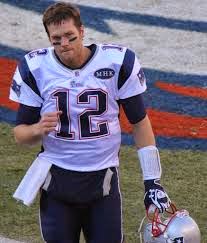 On the next series, Mallett felt some pressure from a hard charge by left linebacker Ryan Kerrigan as he reached the top of his drop -- even though Kerrigan was being effectively blocked. Still, Mallett reacted by taking several quick steps forward in the pocket, right into the awaiting grasp of Orakpo with Solder positioned to keep Orakpo away from the original drop spot but not from the re-positioned Mallett.
With Brady in command of the offense, neither the hold nor the sack would have likely taken place, and the game announcers wouldn't have been spending so much of their commentary pointing out what a tough first quarter it was for Nate Solder.
And with a typical attacking Belichick defense, the post game talk of the depth of the Redskins backfield, featuring six running backs who all ripped off chunk plays either on the ground or through the air, wouldn't have been a major post-game storyline either.
Without Brady's quick release and surgical precision from the pocket, and Belichick's innovative defensive schemes that so often limit the attack options of the opposition, a SuperBowl contender like the Patriots didn't evening look ordinary in this preseason affair -- they looked completely over-matched.
Washington dominated the line of scrimmage on both sides of the ball, piling up nearly 200 yards rushing. Unlike what would unfold in a regular season match-up, the Patriots played the Redskins powerful rushing attach straight up, without any Belichick-inspired wrinkles or blitzes to disrupt their rhythm. The result was being the Redskins moved the ball steadily, accumulating 26 first downs to only 15 for the Patriots, while punting only once over the course of the game.Instead of employing any strategic changes to bolster his team, Belichick seemed content to watch basic one-on-one match ups play out, even as his second and third units weren't showing much of an ability to win these "games within the game."
And while it is certainly true that several key starters on offense, including Brady sat out the entire game, the first quarter struggles of starting left tackle Nate Solder, demonstrated clearly how much difference Brady makes with his sharp decision-making and quick release.
On several running plays to Solder's side of the Patriot line, Solder and his mates were completely overwhelming by the aggressive charge of the Redskins linebackers. For the game, the Patriots were only able to manage a total of 63 rushing yards. Brady's ability to get out of doomed plays at the lien of scrimmage and audible to take advantage of an aggressive opponent was no where in sight.
But it was two first quarter pass plays that demonstrated how much Solder and the Patriots really rely on Brady's savvy. On the first play, outside linebacker Brian Orakpo faked an outside move, then ducked inside to pressure backup quarterback Ryan Mallett. Instead of sensing the rush and drifting to his left to create a better angle for Solder, as Brady has done hundreds of times throughout his 15 year career, Mallett, stood focused only on his receivers, leaving Solder with the option of hauling Orakpo down from behind, which he did for an obvious holding penalty, or letting Mallett get crushed.
On the next series, Mallett felt some pressure from a hard charge by left linebacker Ryan Kerrigan as he reached the top of his drop -- even though Kerrigan was being effectively blocked. Still, Mallett reacted by taking several quick steps forward in the pocket, right into the awaiting grasp of Orakpo with Solder positioned to keep Orakpo away from the original drop spot but not from the re-positioned Mallett.With Brady in command of the offense, neither the hold nor the sack would have likely taken place, and the game announcers wouldn't have been spending so much of their commentary pointing out what a tough first quarter it was for Nate Solder.
And with a typical attacking Belichick defense, the post game talk of the depth of the Redskins backfield, featuring six running backs who all ripped off chunk plays either on the ground or through the air, wouldn't have been a major post-game storyline either.
Wednesday, August 6, 2014
The Beauty of National League Baseball
The strategic beauty of National League baseball was on full display in the sixth and seventh innings of the game on Monday night between the Washington Nationals and the Baltimore Orioles.
If National's catcher Wilson Ramos had just grounded out weakly to second, of lifted a lazy fly to left with two outs in the bottom of the sixth, , rookie manager Matt Williams could of simply given Tanner Roark, the surprise ace of the National's starting staff so far this year, a quick pat on the back and sent him out for the top of the seventh without much fuss.
For sure, Roark didn't seem to have his best stuff going this game, but helped by some stellar defense, he had only allowed 2 runs through six innings against a powerful Orioles lineup.
But Ramos smash a belt high fastball into the right centerfield gap for a clean single, putting runners at the corners with the Nationals holding a tenuous 3-2 lead and Roark due up.
Though Roark isn't one of those pitchers who is a near automatic out at the plate, his average would say that there was a better than 85% that he would strand the runners on base, ending the threat.
Williams didn't seem to hesitate a bit sending Roark to the plate rather then opt to pinch hit, increasing the odds of producing one or more add-on runs. Williams may have been going by the data which clearly showed that any pitch hitter he may have selected to bat for Roark would have only increased the chance of success by 5%-10%. Or he may have just been confident that Roark could hold the Orioles at bay for another inning or two to get to the back end of his bullpen.
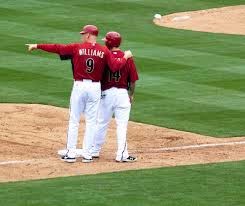 Roark did end up hitting a sharp ground ball between first baseman Chris Davis and the bag forcing Davis to make a fine sliding stop, before gathering himself and completing the out at first.
But very quickly, the defensive part of the plan, the part that Williams needed to feel very confident in to leave Roark in the game, unraveled in a very short order. First J.J. Hardy lead off the inning with a double, followed immediately by a game tying double by Ryan Flaherty.
One out later, Roark was out of the game - only to see middle relievers Ross Detwiler and Craig Stammen each allow an RBI single that would make a loser out of Roark and the Nats in this match up each league's Eastern Division leader.
After the game, it was easy for the media and fans to second-guess Williams' decision to let Roark bat – and they most certainly did. And no one knows how things would have worked out if he had sent a pinch hitter to the plate. But that is the beauty of National League baseball. No American League manager is forces to make a tough call like this one, and they probably sleep better at night as a result.
If National's catcher Wilson Ramos had just grounded out weakly to second, of lifted a lazy fly to left with two outs in the bottom of the sixth, , rookie manager Matt Williams could of simply given Tanner Roark, the surprise ace of the National's starting staff so far this year, a quick pat on the back and sent him out for the top of the seventh without much fuss.
For sure, Roark didn't seem to have his best stuff going this game, but helped by some stellar defense, he had only allowed 2 runs through six innings against a powerful Orioles lineup.
But Ramos smash a belt high fastball into the right centerfield gap for a clean single, putting runners at the corners with the Nationals holding a tenuous 3-2 lead and Roark due up.
Though Roark isn't one of those pitchers who is a near automatic out at the plate, his average would say that there was a better than 85% that he would strand the runners on base, ending the threat.
Williams didn't seem to hesitate a bit sending Roark to the plate rather then opt to pinch hit, increasing the odds of producing one or more add-on runs. Williams may have been going by the data which clearly showed that any pitch hitter he may have selected to bat for Roark would have only increased the chance of success by 5%-10%. Or he may have just been confident that Roark could hold the Orioles at bay for another inning or two to get to the back end of his bullpen.
Roark did end up hitting a sharp ground ball between first baseman Chris Davis and the bag forcing Davis to make a fine sliding stop, before gathering himself and completing the out at first.But very quickly, the defensive part of the plan, the part that Williams needed to feel very confident in to leave Roark in the game, unraveled in a very short order. First J.J. Hardy lead off the inning with a double, followed immediately by a game tying double by Ryan Flaherty.
One out later, Roark was out of the game - only to see middle relievers Ross Detwiler and Craig Stammen each allow an RBI single that would make a loser out of Roark and the Nats in this match up each league's Eastern Division leader.
After the game, it was easy for the media and fans to second-guess Williams' decision to let Roark bat – and they most certainly did. And no one knows how things would have worked out if he had sent a pinch hitter to the plate. But that is the beauty of National League baseball. No American League manager is forces to make a tough call like this one, and they probably sleep better at night as a result.
Sunday, July 27, 2014
That's Baseball
One of the great things about baseball is the melding of the obvious and the settle in an intriguing drama in which the key to the action can be easily overlooked by the casual observer. Yestersday's Reds 1-0 victory over the Nationals was the type of game that separates the sports fan from the true baseball fan.
What was obvious early on in this game was that both starting pitchers had brought their A Game to the ballpark, and runs were going to be very precious and hard to come by. By games end, starters Gio Gonzalez and Jonny Cuerto, along with three relievers combined to give up only eight hits while striking out 21 batter.
With this pitching dominance on display for everyone to see, it was two settle developments that turned the tide in favor of the Reds.

But then on the second pitch to the next batter, Brayan Pena, Heisey took off for third in a very crafty move. Heisey hadn't taken a particularly big lead, nor did anything about his body language or movement give any indication of his intent to swipe third. But what he did take advantage of was the lack of peripheral vision a lefthander naturally has with his back toward a running leading off of second. Plus he took the calculated risk, undoubtedly back by scouting reports, that once Gonzalez refocused on home plate after craning his neck to get a glance at Heisey, that he would not take another peek.
With excellent anticipation, Heisey was able to get an early jump allowing him to steal third easily even with an accurate throw from catcher Wilson Ramos.
Teams don't often bring the their infield in as early as the fifth inning of a tie game. But sensing (correctly in my view) that one run might be mighty big the way this game was unfolding, the Nationals infielders all positioned tight to the infield grass hoping to hold Heisey at third. But on the next pitch, a low, inside curveball, Pena was able to make solid contact with a sharp grounder wide of third. While likely playable for a harmless out if third baseman Anthony Rendon was positioned at normal depth, by playing in he couldn't range quickly enough to his left to get his glove on it.
So by taking advantage of a lefty's natural lack of peripheral vision with a runner on second and the split seconds lost in reaction time with the infield in, the Reds were able to produce the only run of the day in a wonderfully pitched game by both teams.
On this day, if you come to the ballpark to see homeruns, you clearly left disappointed. And though even a true baseball fan might not want to see a whole bunch of these 1-0 games, for this one hot Cincinnati afternoon it was a beautiful thing.
Wednesday, July 9, 2014
Ian Desmond - Repeat Offender
In a post a couple of weeks back, I lamented how Ian Desmond's lack of discipline at the plate is sabotaging his five-tool talent - leaving the former All-Star batting around .240 when he his average could easily 30-40 points higher.
Exhibit A was a first inning strikeout against the Astros with runners in scoring position. In that six-pitch at bat, Desmond swung his at each pitch, even though not one of these pitches was even close to being a strike.
Exhibit B on Monday night was even more frustrating to watch, and ended up being the key at bat in what would eventually would become an 8-2 extra inning loss to the Orioles.
With the winning run on second and one out in the bottom of the ninth, Desmond faced a tough sidearming righthander in Darren O'Day. And again he came to the plate hacking away. The first pitch was a fastball over the plate but shoulder height, well out of the strike zone. But that didn't prevent Desmond from taking a futile but vicious swing.
When Desmond stepped out of the box between pitches, it almost looked like he had a bird on each shoulder whispering in each ear. The bird on his right shoulder was telling him to calm down, wait for his pitch and take the ball up the middle for a game winning single. But the bird on the left shoulder was screaming, "swing hard just in case you hit it."
The second pitch was another fastball, at least as high as the first, but this one was inside as well. With the left shoulder prevailing, Desmond took another big, empty hack.
If O'Day wasn't already pitching to a scouting report of Desmond's free-swinging ways, he surely recognized by now that if he didn't make a mistake over the plate, that Desmond would get himself out.
The next two pitches were breaking balls well off the outside corner which Desmond was able to foul off - one squibbing awkwardly off the very tip of his bat.
Pitch number five was again outside, but close enough that most batters in protection mode would offer at. Desmond waved again on this fifth consecutive swing on what would have been "ball five" leaving our "Mighty Casey" heading back to the dugout, mumbling to himself in frustration as the Nats best chance to pull out a victory in this taunt well-played pitchers duel, vanished into the warm night.
 | |||||||||||||||||||||||||||||||||||||||||||||||||||||||||||||||||||||||||||||||||||||||||||||||||||||||||
| A frustrated Desmond heads back to the dugout |
Monday, June 30, 2014
The New York Yankees: Who are These Guys!!!
I have to admit that I haven't been paying close attention to the box scores lately. So over my breakfast of yogurt and fruit this morning, it was a bit of a shock to see the Yankees had used six pitchers last night, and I had never heard of a single one of them.
As far as I know, Whitley, Kelley, Huff, Betances, Ramirez and Thornton just as easily could be the name of a Wall Street law firm as the outfit that gave up 8 earned runs to the Red Sox in an 8-5 loss.
Just five years ago, when the Yankees were winning the 27th World Series title in their long and decorated history, they were lead by familiar starting pitchers with names like Sabathia, Burnett, Pettitte, and Chamberlain, with win after win being secured by the always reliable Mariano Rivera locking down the ninth inning and occasionally at least part of the eighth as well.
The Yankees will certainly need to pick up their winning pace considerably to allow "The Firm" to become household names beyond the five Burroughs -- and perhaps even within them.
Glancing at the top portion of the box score, I was welcomed by the comfort of a whole bunch familiar names including the likes of Jeter, Beltran, Roberts and Suzuki. But a quick check revealed that each of these four stalwarts is either pushing, or has already pushed past age 40. And though two are sure-fire Hall-of-Famers, with a possible third in Beltran, they are all decidedly well-past their prime.
With Rivera at long last calling an end to his first-ballot Hall-of-Fame career, maybe this truly is the end of an era. Perhaps the many years of buying up the big name free agents and trading youth for veterans to win now is finally taking its toll. Or perhaps some of these "no names" will lead the Yankees back to greatness.
But another glance quickly reveals that three of the six no-name pitchers is sporting an ERA of 4.70 or higher, so the odds seem decidedly against it. And against the Yankees revisiting their glory days anytime soon.
Subscribe to:
Posts (Atom)